Vagus Nerve Stimulation Exercises for Stress
Vagus Nerve Stimulation Exercises for Stress: Simple Practices to Calm Your Nervous System
There are moments when stress feels like it has taken up permanent residence in your body, a tight chest, a restless mind, or a low-level hum of anxiety that simply will not shift. If that sounds familiar, you are far from alone. What many people do not realise, however, is that there is a natural, built-in pathway to calm wired right into your body: the vagus nerve.
In this article, we look at what the vagus nerve actually is, why it matters for stress, and, most importantly, seven gentle, practical exercises you can begin today to support a calmer, more grounded state of being. As always, if you are managing a chronic health condition, please speak with your GP or healthcare provider before starting any new wellness practice.
What Is the Vagus Nerve?
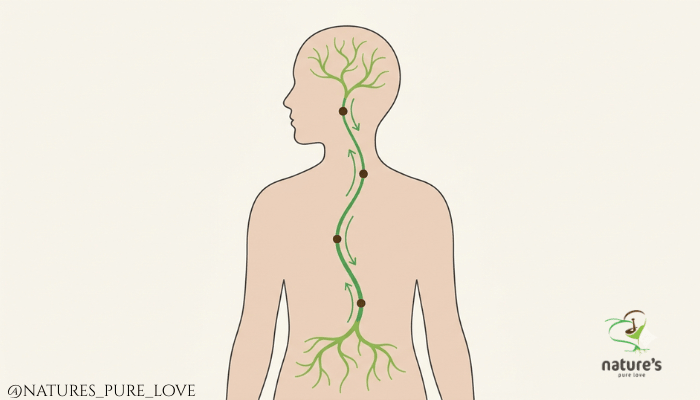
The vagus nerve is the longest cranial nerve in the human body. Running all the way from the brainstem down through the neck, chest and abdomen, it forms a two-way communication highway between your brain and your major organs, including the heart, lungs and gut. Its name comes from the Latin word for 'wandering', and it truly does wander: touching almost every system involved in your body's automatic, day-to-day regulation.
A healthy vagus nerve sits at the heart of what researchers call the parasympathetic nervous system, the 'rest and digest' branch that balances out the more well-known 'fight or flight' response. When your vagal tone (essentially, the strength and efficiency of your vagus nerve's activity) is good, your body finds it easier to recover from stressful events and return to a state of calm.
The Vagus Nerve and Stress: Why It Matters
When stress hits, whether it is a tight deadline, a difficult conversation, or simply the relentless pace of modern life, your body's sympathetic nervous system fires up. Your heart rate climbs, your muscles tense, and your body readies itself for action. That is a perfectly normal and, in the short term, a protective response.
The problem arises when that stress response stays switched on. Chronic, unrelenting stress has been linked to a wide range of health concerns, from poor sleep and digestive issues to low mood and immune function. Research suggests that a well-toned vagus nerve helps the body shift out of this state more efficiently, acting like a natural brake on the stress response.
The good news? There are evidence-informed practices that may support vagal tone, and you can do most of them at home, often in just a few minutes a day.
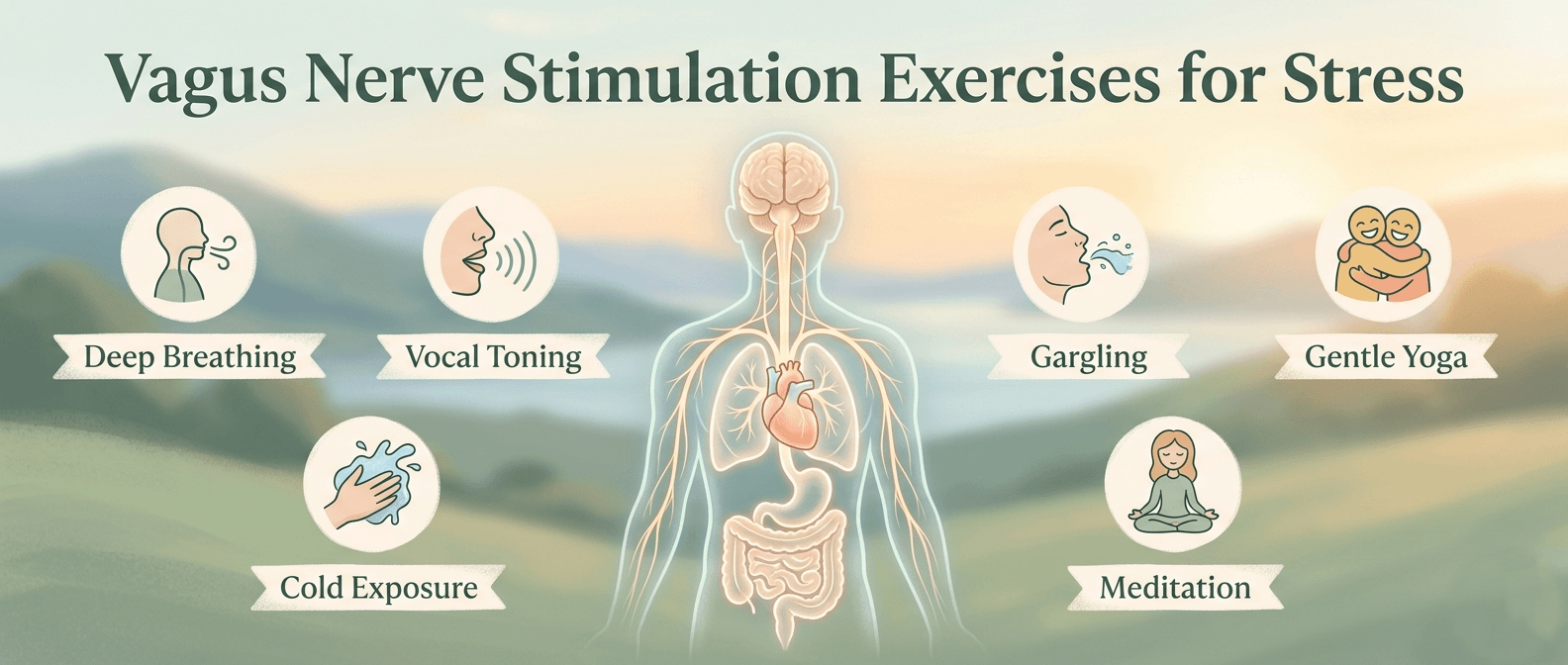
7 Vagus Nerve Stimulation Exercises for Stress Relief
1. Deep Diaphragmatic Breathing
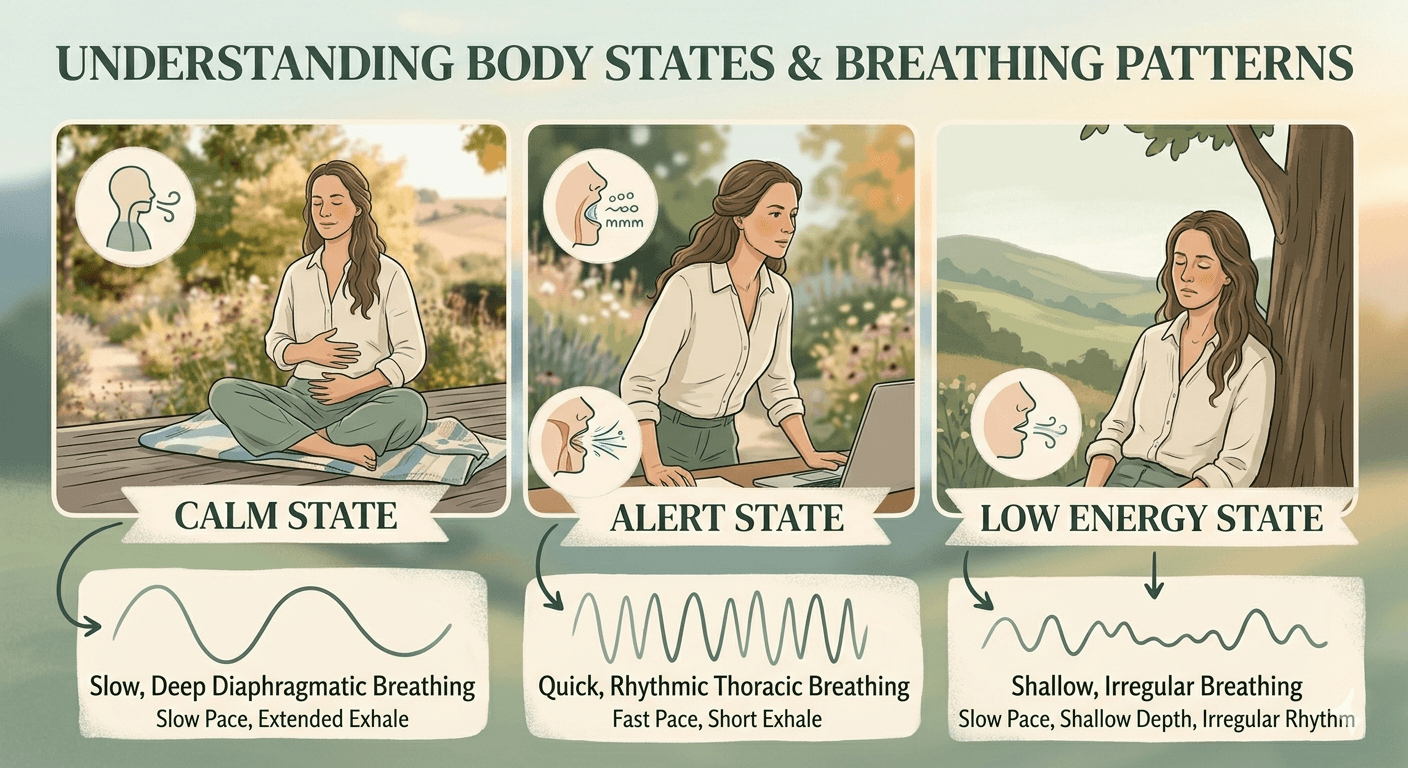
Perhaps the most accessible tool you have, deep belly breathing directly activates the vagus nerve. When you breathe slowly and deeply from your diaphragm, rather than from your chest, you trigger the body's calming response almost immediately.
Try the 4-7-8 method: inhale through your nose for four counts, hold for seven, then exhale slowly through your mouth for eight. The extended exhale is key, as it is the out-breath that most strongly signals safety to your nervous system, a fact supported by NHS Every Mind Matters guidance on breathing for stress relief.
2. Humming, Chanting and Singing
This one might raise a few eyebrows, but it is grounded in anatomy. The vagus nerve passes through the larynx, which means that any vibration in this area, whether from humming a tune, singing along to a favourite song, or repeating a simple mantra, sends a direct signal along the nerve.
Even a slow, low hum for two to three minutes can shift your nervous system state. If you practice meditation, a simple 'mmm' sound or 'om' chant can work beautifully here.
3. Cold Water Exposure
You do not need a full cold-water plunge for this one. Splashing cold water on your face, or placing a cold compress on the back of your neck for 30 seconds, stimulates what is known as the 'diving reflex', which activates parasympathetic pathways linked to the vagus nerve.
If you are comfortable with it, ending your shower with 30 to 60 seconds of cooler water is a simple, buildable practice that many find genuinely refreshing. Research published via the NIH supports the role of this reflex in activating parasympathetic pathways. Always check with your GP first if you have a heart condition or blood pressure concerns.
4. Gargling with Water
A surprisingly effective and underrated practice: vigorous gargling for 30 to 60 seconds activates the muscles at the back of the throat, an area richly supplied by the vagus nerve. Done regularly (morning or evening work well), it may contribute to improved vagal tone over time.
Try gargling with warm water, or with water and a small amount of sea salt, for two to three rounds each session.
5. Mindful Movement and Gentle Yoga
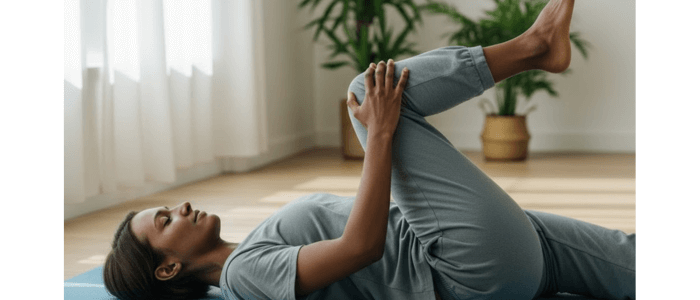
Slow, intentional movement, particularly the kind that links breath to motion, has a well-established relationship with the parasympathetic nervous system. Practices like yoga, Tai Chi and Qigong bring the body and mind into a coordinated rhythm that many researchers believe supports vagal tone. If you are looking for ways to work movement into your day gently, our guide to mindful movement for limited mobility offers a wonderful starting point.
You do not need to be experienced or flexible. Even ten minutes of gentle stretching with focused, slow breathing can make a real difference. Poses that open the chest, like Cat-Cow or a supported backbend, are particularly worth trying.
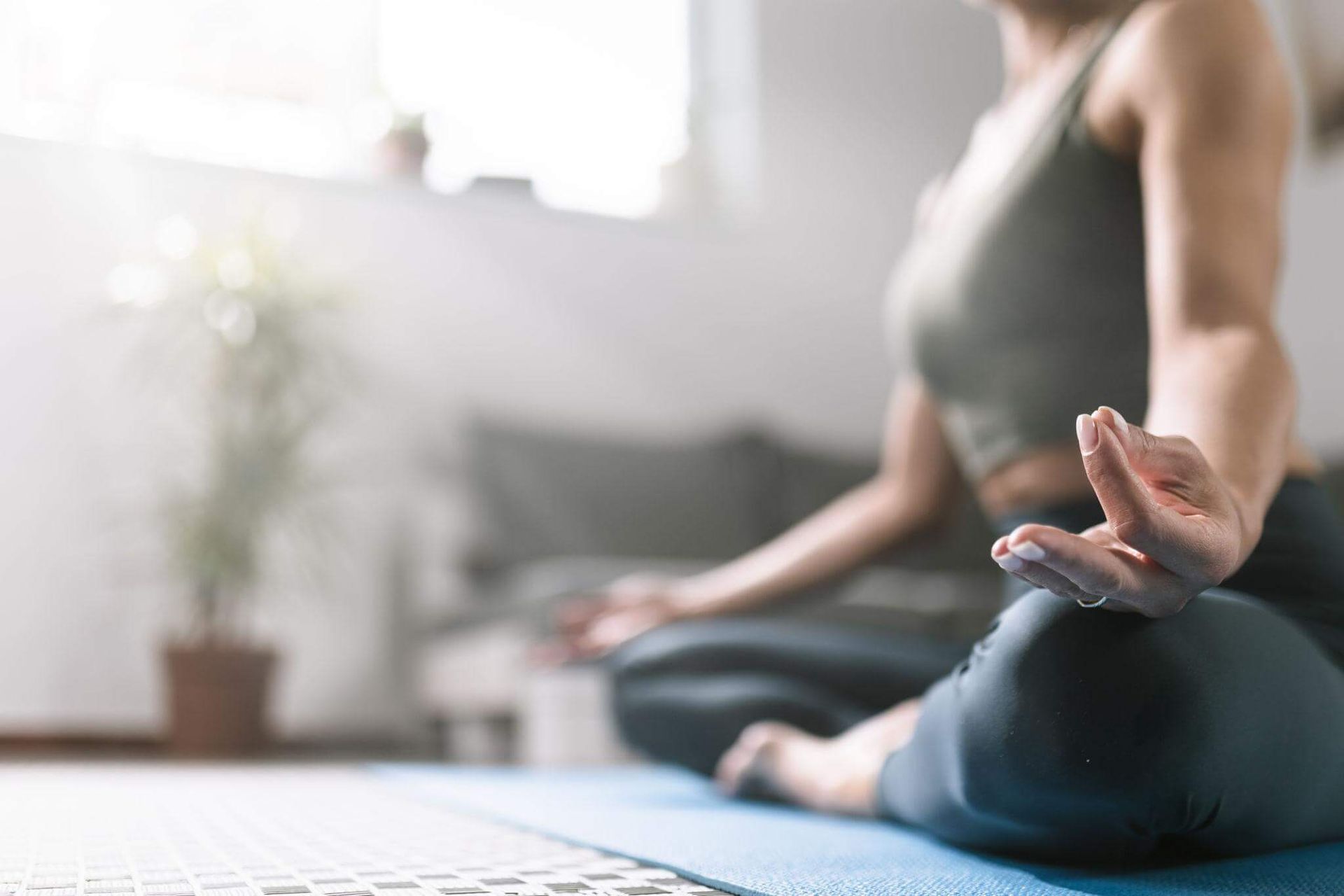
6. Meditation and Body Scan
Regular meditation practice, even as little as ten minutes a day, has been associated in research with improvements in heart rate variability (HRV), a key marker of vagal tone. A body scan, where you systematically bring gentle attention to different areas of the body without judgment, is especially well suited to those dealing with chronic stress or tension. It is also worth reading our piece on managing pain and fatigue flare-ups holistically, which explores how meditation and mind-body practices can support those with persistent physical symptoms.
There are many free guided body scans available via the NHS Every Mind Matters platform and mindfulness apps. Start where you are; even three minutes of stillness counts.
7. Genuine Social Connection and Laughter
Polyvagal theory, developed by neuroscientist Dr Stephen Porges, places social connection at the very top of our nervous system's safety hierarchy. Warm, genuine interactions with people we trust, a good conversation, shared laughter, or even a meaningful hug, directly activate what Porges calls the 'social engagement system', a key function of the ventral vagal pathway.
This is not just soft science. Published research on Polyvagal Theory underlines how social engagement directly shapes our physiological state, a reminder that healing and calm are often found in connection, with others and with ourselves. Nurture your relationships as an active part of your wellness practice.
The Gut-Brain Axis: Another Reason to Care for Your Vagus Nerve
Around 80% of the information travelling along the vagus nerve moves upwards, from your gut to your brain. This remarkable fact sits at the heart of the growing field of gut-brain research, which suggests that a healthy gut microbiome and a well-toned vagus nerve work closely together to influence mood, cognition and stress resilience.
Supporting your gut with whole foods, fermented foods and adequate fibre is therefore not separate from your nervous system health, it is very much part of the same picture.
Building a Consistent Vagus Nerve Practice
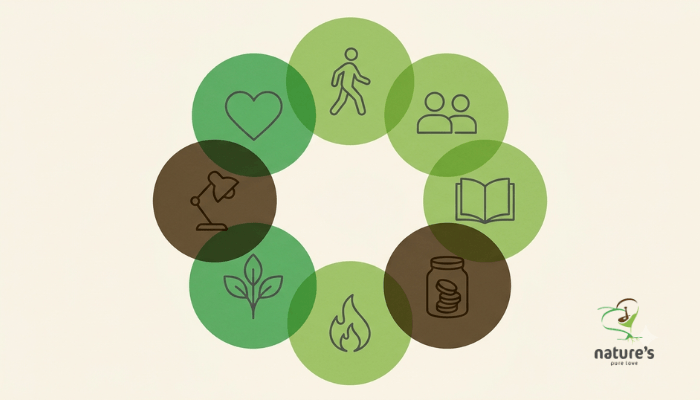
The most important word in any wellness practice is consistency. You do not need to do all seven exercises every day, in fact, that approach can itself become a source of pressure. Instead, consider picking two or three that feel accessible and genuinely enjoyable, and working them into existing routines.
A sample daily rhythm might look like this:
• Morning: 3 minutes of deep diaphragmatic breathing before getting out of bed.
• Mid-morning: Gargling as part of your bathroom routine.
• Evening: A short body scan or gentle yoga flow before bed.
Over time, small and steady practice tends to outperform intense, short-lived efforts. Think of it less as a treatment plan and more as a daily act of kindness toward your nervous system. For broader inspiration on building a lasting holistic lifestyle, take a look at our guide to transforming your mind and body naturally.
A Final Word
Stress is a part of life, but it does not have to define how your body feels day to day. The vagus nerve offers a beautiful reminder that your body already holds extraordinary tools for self-regulation. These exercises are an invitation to work with your body rather than against it.
At Nature's Pure Love, we believe that real, lasting wellness grows from understanding your body, respecting its signals, and nourishing it with practices that feel right for you. Whether you are new to this conversation or have been on a holistic wellness journey for years, we hope these simple tools bring a little calm into your day.
Always consult a qualified healthcare professional before making significant changes to your health routine, particularly if you are managing a chronic condition.