Functional Foods for Hormonal Balance
Your hormones govern far more than your menstrual cycle. They regulate your mood, your energy, the quality of your sleep, the clarity of your thinking, and how efficiently your body manages its weight. When they are in sync, you feel grounded, resilient, and like yourself. When they drift — as they so often do in response to stress, poor sleep, nutritional gaps, or the natural changes of each life stage — the effects can spread quietly across your daily life in ways that are easy to miss or write off as just being tired.
The good news is that your plate is one of the most direct tools you have. Research into so-called 'functional foods' — those that offer real, measurable health benefits beyond their basic nutritional content — is revealing increasingly specific ways in which what you eat influences how your body produces, uses, and clears its own hormones. This is not a territory of overnight fixes. But the evidence is solid enough, and the steps practical enough, to make the effort genuinely worthwhile.
This guide walks you through what we know, the foods themselves, and the daily habits that make it all work — written clearly, so that you do not need a science background to use it.
What Does 'Hormonal Imbalance' Actually Mean?
The phrase gets used loosely — and understandably so, because it covers a wide range of experiences. In simple terms, hormonal imbalance means that one or more of your body's chemical messengers is circulating at a level that is either too high or too low to work properly. For women, the ones most commonly involved are oestrogen, progesterone, testosterone, insulin (the hormone that manages blood sugar), the stress hormone cortisol, and your thyroid hormones — and these do not operate independently. Each one influences the others.
What makes this tricky is that the symptoms can be surprisingly non-specific. Fatigue that sleep does not fix. Mood changes in the week before your period. Adult-onset skin breakouts. Hair thinning. Weight that shifts without clear dietary reason. Cycles that are irregular or painful. Afternoon brain fog. Waking between two and four in the morning, which is a common sign that your stress hormone levels are not settling down at night as they should.
These are the kinds of complaints that often do not point neatly to a diagnosis, but that genuinely affect quality of life.
Some hormonal fluctuation is completely normal — it is a feature of being a woman, not a flaw. The menstrual cycle, pregnancy, the run-up to menopause, and menopause itself all involve deliberate, healthy hormonal change. What food strategies aim to do is give your body's natural regulatory systems enough support that those transitions happen as smoothly as possible, and that the avoidable disruptions — from blood sugar instability, gut imbalance, nutritional gaps, or chronic stress — are kept to a minimum.
How Food Shapes Your Hormones
Your hormones are built from the raw materials you eat. Your body makes oestrogen, progesterone, and cortisol from cholesterol. Insulin and other chemical messengers are built from protein. The vitamins and minerals you take in every day control the processes that make, activate, and break down each hormone. When those building blocks are consistently available, the system works well.
When they are chronically short, the whole process begins to falter.
Something that many people do not realise is that your gut plays a far more central role than you might expect. A specific group of gut bacteria controls how your body processes and removes used oestrogen. When your gut is in good health, your liver packages up spent oestrogen, moves it into the digestive tract, and the body passes it out naturally. When the gut is out of balance, certain bacteria can wake up that used oestrogen and send it back into the bloodstream - a process linked to conditions where oestrogen builds up at higher levels than the body can comfortably balance, including endometriosis and painful, heavy periods.
Keeping blood sugar steady is one of the most direct and accessible things you can do for your hormonal health. When blood sugar repeatedly spikes and crashes — often after meals high in refined carbohydrates or sugar — the hormone insulin has to keep surging in response. Over time, the body's cells can start to ignore insulin's signal, a state known as insulin resistance.
When this happens, the body compensates in ways that disrupt your hormonal balance: it can cause the body to release more protein that keeps testosterone in check, meaning more testosterone ends up floating freely in the bloodstream, and it can contribute to conditions like polycystic ovary syndrome (PCOS) — a hormonal condition affecting ovulation and androgen levels — as well as thyroid disruption.
Ten Functional Foods That May Support Hormonal Balance
1. Cruciferous Vegetables
Broccoli, cauliflower, Brussels sprouts, kale, and rocket contain natural plant compounds that, once digested, may support the liver's ability to process oestrogen more cleanly. The liver is your body's main hormone-clearing organ — it is responsible for breaking down used oestrogen and packaging it for removal. These vegetables also contain sulphur-based compounds and antioxidants that support the liver's ability to do this job well. Light steaming or roasting preserves more of these beneficial properties than boiling. Aim for three to five servings each week.
2. Flaxseeds
Research suggests the natural plant compounds in flaxseeds may interact with the body's oestrogen pathways — either gently supporting or dampening oestrogen's effects depending on what the body needs at the time. This adaptable quality makes flaxseeds particularly worth considering during the run-up to menopause, when oestrogen levels can fluctuate unpredictably. Flaxseeds are also a good source of plant-based omega-3 fat and of soluble fibre — both of which feed the gut bacteria responsible for managing oestrogen clearance. Ground flaxseed is much better absorbed than whole; adding a tablespoon to your porridge, yoghurt, or a smoothie each morning is a simple, low-effort habit.
3. Fatty Fish
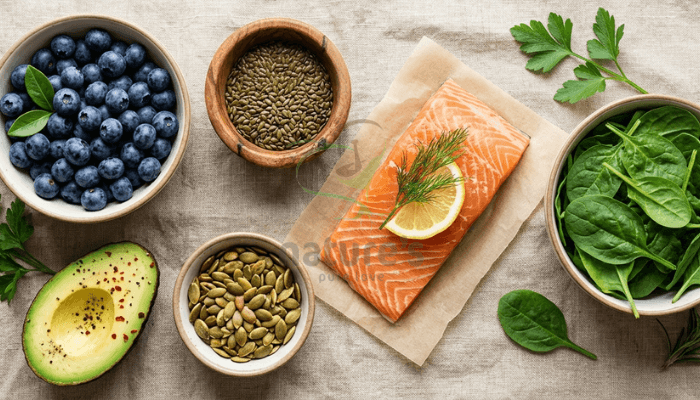
Salmon, mackerel, sardines, herring, and anchovies provide omega-3 fats in the most active and well-researched form your body can use directly. These fats are woven into the walls of your cells, improving how well your cells respond to insulin, reducing the hormone-like compounds in the body that cause menstrual cramping, and helping your body manage its stress hormone response. Fatty fish also provides vitamin D, which works as a supporting factor in hormone production and has been studied in relation to cycle regularity and PCOS. Aim for two portions of oily fish each week — a recommendation that aligns with NHS dietary guidance.
4. Avocado
Avocados are rich in healthy fats that help your body absorb the fat-soluble vitamins — A, D, E, and K — from the other foods you eat alongside them. All of these vitamins have roles in hormonal function. Avocados also contain a natural plant compound that research suggests may help the body manage its stress hormone response, particularly after physical or emotional demands. Vitamin B6, found in avocados, is needed for your body to produce progesterone — the calming counterpart to oestrogen — and to make serotonin, the mood-regulating chemical that tends to dip in the week before your period. Use avocado in place of butter, blend into smoothies, or enjoy simply with eggs.
5. Fermented Foods
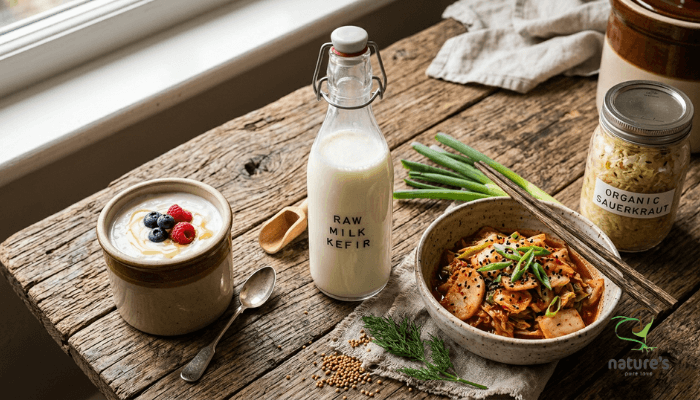
Live yoghurt, kefir, kimchi, sauerkraut, miso, and tempeh all introduce beneficial bacteria into your gut. A healthy, varied population of gut bacteria has a direct influence on how your body processes and removes oestrogen — keeping the balance between clearing it efficiently and accidentally recirculating it. Beyond that, a large proportion of the body's mood-regulating chemicals — including most of its serotonin — are actually produced in the gut. Supporting your gut health through fermented foods may therefore have real effects on the mood and emotional symptoms that tend to come with hormonal shifts. A tablespoon of kimchi or sauerkraut alongside meals, or a daily serving of live yoghurt or kefir, is one of the easiest habits to build.
6. Berries
Blueberries, raspberries, blackberries, and strawberries get their deep blue, red, and purple colours from natural plant pigments that act as powerful antioxidants. Vitamin C, also plentiful in berries, is notably concentrated in the adrenal glands — the glands that produce your stress hormones — where it is used up quickly under pressure. Research suggests that quercetin, another natural compound in berries, may help slow the process by which the body converts certain hormones into oestrogen — something that may be relevant if you are dealing with conditions linked to androgen excess. Berries are also relatively gentle on blood sugar, making them a sensible fruit choice for anyone managing insulin levels. Frozen berries are just as nutritious as fresh and significantly more affordable.
7. Leafy Greens
Spinach, Swiss chard, kale, and watercress are among the richest food sources of magnesium available. Magnesium is involved in hundreds of processes in the body — and many of them matter directly for hormonal health. It helps regulate how your body responds to stress and how much stress hormone it releases. It supports the production and activity of progesterone. It improves how well the body responds to insulin. It has well-documented evidence for reducing PMS symptoms including cramps, headaches, and low mood. Research also links higher magnesium intake to better sleep quality — and consistent, good-quality sleep is one of the most important factors in overnight hormonal restoration. Wilt leafy greens into curries, blend them into smoothies, or use them as the base of a daily salad.
8. Pumpkin Seeds and Walnuts
Pumpkin seeds are one of the best plant-based sources of zinc — a mineral your thyroid needs to make its hormones, that your body needs to trigger ovulation, and that may help moderate excess male-type hormones in conditions like PCOS. Zinc deficiency is linked to irregular cycles, skin problems, impaired fertility, and low immune function, and it is more common than many people realise. Walnuts provide plant-based omega-3 fat and contain melatonin — the hormone your body uses to regulate your sleep cycle. Research suggests melatonin supports the overnight window during which many of your hormones are restored and rebalanced. A small handful of either, added to porridge or eaten as a snack, delivers these benefits without any complexity.
9. Legumes
Lentils, chickpeas, black beans, edamame, and kidney beans offer a combination of plant protein, filling fibre, and natural plant compounds that gently mimic oestrogen in the body — sitting in the same 'docking points' that oestrogen normally uses, but with a much softer effect. Research suggests that whole soy foods in particular may help ease hot flushes and night sweats during perimenopause and menopause, when oestrogen levels are in decline. The fibre in legumes also feeds the gut bacteria that manage oestrogen clearance and slows the absorption of sugar into the bloodstream — making them one of the most versatile additions to hormone-supportive eating. Tinned lentils and chickpeas are just as nutritious as dried and considerably more convenient.
10. Turmeric
The active ingredient in turmeric has been studied for its ability to switch off some of the body's main inflammatory triggers. Persistent low-grade inflammation is associated with disrupted hormonal communication at a cellular level, and has been studied specifically in relation to the hormonal profile of PCOS. One practical consideration: the active ingredient in turmeric is not easily absorbed by the body on its own. Adding black pepper — which contains a natural compound that dramatically improves how much your body can take in — makes it significantly more effective. Some estimates suggest black pepper can improve absorption by up to 2,000%. Combining turmeric with black pepper and a healthy fat (like olive oil) in curries, soups, or golden milk is the most effective way to get the benefit.
Foods Worth Considering Less Often
A hormone-supportive approach is mostly about what you add — not what you take away. That said, a few patterns are worth paying attention to:
• Refined sugar and white-flour-based foods cause blood sugar to rise and fall sharply, which leads the body to release repeated surges of insulin. Over time, this makes the body less and less responsive to insulin — worsening conditions like PCOS and disrupting thyroid function.
• Alcohol is processed by the liver — the same organ responsible for clearing used hormones. When the liver is busy processing alcohol, hormone clearance is pushed aside, allowing oestrogen in particular to build up. It also depletes magnesium and B vitamins, and disturbs the deep sleep that enables overnight hormonal restoration.
• Excess caffeine triggers a release of stress hormones and, when consumed late in the day, interferes with the natural hormonal shift from alertness to rest that allows you to fall asleep. Two to three cups of coffee before midday is generally well tolerated; habitual late-day caffeine is worth reconsidering if sleep is already a struggle.
• Processed soy products found in protein bars and packaged meat alternatives are quite different from whole soy foods like edamame, tofu, and miso. In their highly processed form, concentrated soy compounds without the buffering effect of natural fibre may affect thyroid function in those with existing thyroid conditions. Whole soy foods are a different matter and are supported by the research.
Practical Principles for Hormone-Supportive Eating
Individual foods matter — but the overall pattern of your diet matters more. The eating approaches with the strongest evidence for hormonal health share a handful of common threads:
• Build every main meal around protein, fibre, and healthy fat. This combination slows down how quickly sugar enters the bloodstream, keeps you feeling full for longer, and provides the building blocks your body needs to make hormones. It does not need to be complicated: eggs with spinach and avocado; lentil soup with a side of oily fish; a handful of pumpkin seeds and berries as an afternoon snack.
• Eat at least 30 different plant foods each week. This sounds ambitious, but it includes herbs, spices, nuts, seeds, and grains — not just vegetables. Variety is the single most consistent predictor of a healthy, diverse gut — and a diverse gut directly supports how well your body processes and removes hormones.
• Eat regularly, rather than skipping meals. How often you eat matters as much as what you eat. Going long stretches without food raises stress hormones and can create unpredictable blood sugar swings later in the day. Starting with a protein-based breakfast is one of the most effective habits for keeping these patterns stable.
• Drink plenty of water. Every metabolic process in the body — including the liver's ability to process and clear hormones — depends on adequate hydration. Mild dehydration is easy to overlook and meaningfully impairs how efficiently the body works.
The Bigger Picture: Food Works Best Alongside the Rest of Your Life
Chronic stress keeps your stress hormones elevated, and when they stay high for too long, they begin to suppress the very hormones — progesterone, thyroid hormones — that support regular cycles, restful sleep, and emotional steadiness. Even the most carefully chosen diet will have a limited effect if your body's stress-response system is in a state of constant activation. Practices that help you genuinely decompress — whether that is time outdoors, breathwork, setting firmer boundaries around work, or simply protecting time for rest — are not optional extras in the hormonal health picture. They are foundational.
Sleep sits in the same category. The hours between roughly ten at night and two in the morning are when your body produces growth hormone, carries out cellular repair, and restores hormonal balance after the day's demands. Consistently poor sleep raises hunger hormones, lowers appetite-regulating hormones, elevates stress hormones, and — over time — worsens how well the body responds to insulin. No amount of good eating fully compensates for consistently poor rest.
Movement — even gentle, consistent movement — supports how well the body responds to insulin, reduces background inflammation, and improves mood through the body's natural feel-good chemicals. For women with hormonal conditions that affect energy levels or physical comfort, finding movement that is sustainable and kind to the body tends to be more effective — and far more enjoyable — than pushing through high-intensity exercise that can place additional demands on an already stretched system.
If your symptoms are persistent, significant, or affecting daily life, a conversation with your GP is always the right starting point. A simple blood test measuring key hormone levels can reveal what is actually happening in your body — and that knowledge makes any dietary or lifestyle strategy far more targeted and effective.
A Final Word
Your hormones respond to the conditions you create for them. Food is not a magic solution — and it is not a substitute for medical care. But it is one of the most evidence-supported, accessible, and genuinely empowering levers available to you, precisely because you work with it every single day.
Adding ground flaxseed to your morning oats, choosing oily fish twice a week, building meals around leafy greens and lentils, and including something fermented alongside a meal — these are small, sustainable steps. Over weeks and months, they compound into something meaningful. Your plate, every day, is one of the most practical places to start.
Functional Foods & Hormonal Balance
Your most common questions about eating for your hormones — answered with care, and grounded in evidence.
Functional foods are whole or minimally processed foods that offer measurable health benefits beyond their basic macronutrient content. Where a standard food provides calories, protein, fat, or carbohydrate, a functional food also delivers specific bioactive compounds — such as lignans, phytoestrogens, omega-3 fatty acids, or plant sterols — that interact with the body's physiological systems in meaningful ways.
Flaxseeds, for instance, are not just a source of fibre. They contain lignans that research suggests may bind to oestrogen receptors and help moderate oestrogen activity. Cruciferous vegetables do more than provide vitamins — they contain indole compounds that may support the liver's ability to metabolise and clear oestrogen efficiently. The distinction is not about "superfoods" or miracle ingredients, but about choosing foods whose nutritional profile actively supports your body's systems, including the endocrine system.
Research points to a consistent group of foods with the strongest evidence for supporting female hormonal health: ground flaxseeds, oily fish(salmon, mackerel, sardines), cruciferous vegetables(broccoli, kale, cauliflower), leafy greens, legumes, fermented foods(live yoghurt, kefir, kimchi), berries, avocado, pumpkin seeds, and turmeric.
What they share is significant — high fibre content, anti-inflammatory fatty acids, phytonutrients that support liver and gut function, and key micronutrients including magnesium, zinc, and B vitamins. No single food is a solution on its own. The evidence consistently favours overall dietary patterns over isolated ingredients, so variety and consistency across your meals and weeks matter far more than focusing on any one item.
Research suggests that diet can have a meaningful influence on the hormonal profile associated with polycystic ovary syndrome (PCOS), though it is not a replacement for medical treatment. PCOS is closely linked to insulin resistance — a state where cells respond less effectively to insulin's signal — which in turn drives elevated androgen production and lowers sex hormone binding globulin (SHBG).
Dietary strategies that may help include prioritising low-GI carbohydrates (legumes, oats, sweet potato), increasing dietary fibre, including omega-3-rich oily fish regularly, and adding zinc-containing foods such as pumpkin seeds. Anti-inflammatory foods — turmeric, berries, leafy greens — may also support the inflammatory component of PCOS. Working with your GP and a registered dietitian to personalise this approach is strongly recommended.
This is a genuinely nuanced area, and the evidence is more reassuring than the concern often suggests. Phytoestrogens — including lignans (in flaxseeds) and isoflavones (in soy foods) — bind to oestrogen receptors with a much weaker affinity than the body's own oestrogen. Research suggests they may have a modulating effect: acting as mild agonists when oestrogen is low (as in menopause) and potentially competing with stronger oestrogen at receptor sites when levels are elevated.
Large prospective studies, particularly from populations with high whole-soy intake, have not demonstrated increased risk from whole-food phytoestrogen sources. That said, if you have an oestrogen-sensitive condition such as oestrogen receptor-positive breast cancer or endometriosis, it is important to discuss any significant dietary changes with your oncologist or specialist before proceeding.
There is no single answer, as the timeline depends on the nature of the imbalance, your dietary starting point, and how consistently you maintain the changes. Some shifts — such as reduced bloating from adding fermented foods, or steadier energy from stabilising blood sugar — may become noticeable within one to two weeks.
Cycle-related changes, such as reduced PMS severity or more regular periods, often become apparent after two to three full menstrual cycles, as your body requires time to shift hormonal patterns. Longer-standing imbalances, or those driven by conditions like PCOS or thyroid dysfunction, may take three to six months of consistent dietary change before meaningful improvement is observed. Tracking symptoms across cycles using a journal or app can help you identify patterns that are not obvious day to day.
The luteal phase — the roughly two weeks between ovulation and the start of your period — is when progesterone rises and then falls, and when PMS symptoms most commonly appear. Research suggests that certain nutrients may support this phase specifically.
Magnesium(leafy greens, dark chocolate, pumpkin seeds, legumes) has the most consistent evidence for reducing PMS symptoms including cramping, headaches, and mood disturbance. Vitamin B6(avocado, poultry, bananas) may support progesterone synthesis and serotonin production. Omega-3 fatty acids from oily fish may help moderate the prostaglandin activity that drives period pain. Prioritising complex carbohydrates — oats, sweet potato, legumes — during this phase may also help with the blood sugar stability and carbohydrate cravings that many women notice in the days before their period.
Small, consistent changes are often more effective than strict or rigid overhauls — and the evidence supports this. Hormonal health responds to habitual dietary patterns rather than short-term interventions, which means what you do most of the time matters far more than perfection on any given day.
Practical starting points include adding a tablespoon of ground flaxseed to your morning oats, including oily fish twice a week, swapping a snack for a handful of pumpkin seeds or berries, and including a daily serving of fermented food (live yoghurt, kefir, or kimchi). Each change is small in isolation, but together — and sustained over weeks and months — they can meaningfully shift the nutritional environment your hormones operate within. Restrictive approaches that eliminate whole food groups can introduce nutritional gaps and increase physiological stress, which may worsen rather than support hormonal balance.